North Yorkshire surveyors
RICS Chartered Surveyors in Harrogate
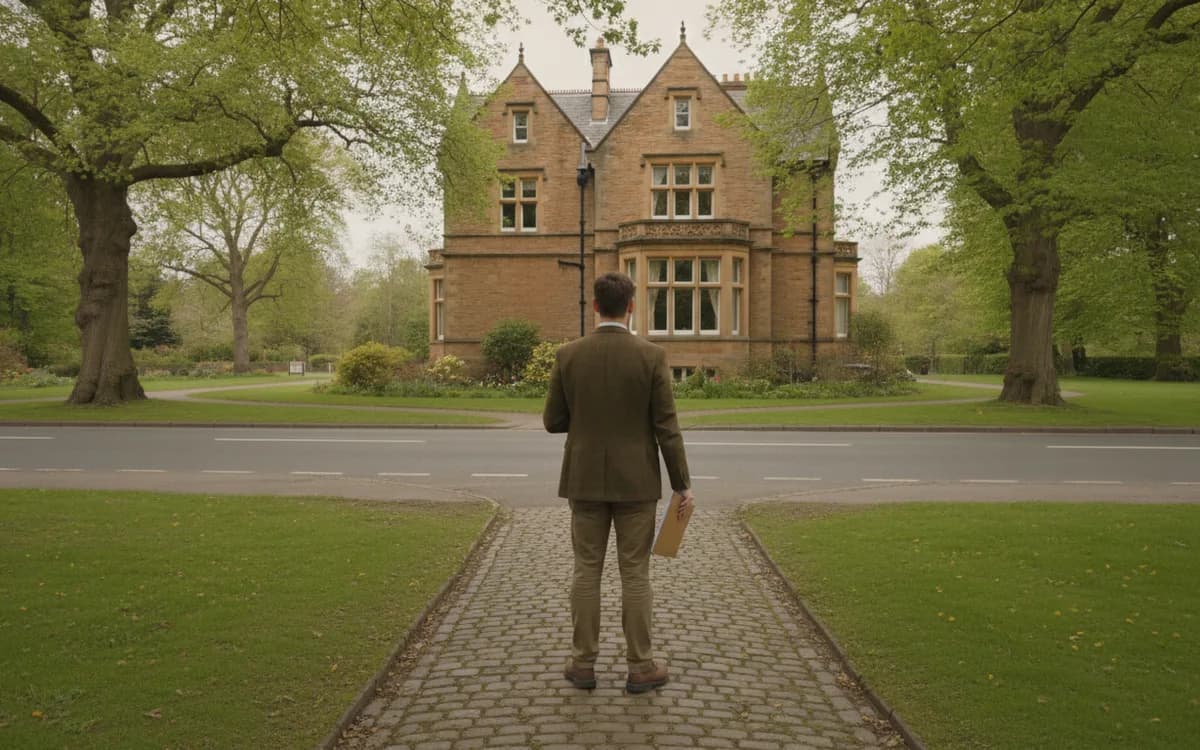
Harrogate grew as a spa and it built like one. The wide roads of the Duchy estate, Cornwall Road and the streets around Harlow Moor were laid out for large detached and semi detached houses in local gritstone, most of them Victorian or Edwardian, most with a lower ground floor, a deep bay and tall sash windows under a Welsh slate roof. Closer to the centre are the tighter terraces and lodging houses that once took visitors, running off Kings Road, Franklin Road and Skipton Road. Wrapped around the whole of the old town is the Stray, two hundred acres of protected open ground that nobody may build on, and the houses that front it are among the most closely watched in North Yorkshire.
A private valuation in Harrogate is an independent open market figure from a RICS registered valuer, prepared for a family transfer, an estate, a separation or a sale you want to price properly before it is listed. It is not a condition report. We attend within 3 to 5 working days of instruction.
Surveying property in Harrogate
A good deal of what we do in this town is not a purchase survey at all. Values here are high enough that a figure matters in its own right. An executor has to settle an inheritance tax account. A separating couple has to divide the only asset that counts. A parent wants to pass a house to a child without guessing at the number. A seller wants to test an agent's suggestion before the board goes up. Those are private, probate and matrimonial valuations, and in Harrogate they are a standing part of the diary rather than an occasional extra.
Where you are buying, the real question is whether the building has been divided. A 1930s semi at Pannal or a well kept post war detached at Killinghall sits comfortably within a Level 2 Homebuyer Survey. A four storey villa carved into six flats sixty years ago does not, and a Level 3 Building Survey on it usually repays its fee several times over. Whichever you instruct, one chartered surveyor inspects the property, writes the report and takes your call about it afterwards. The fee is agreed in writing before you commit, attendance is normally within 3 to 5 working days of instruction, and the report follows 3 to 5 working days after the visit. Tell us at the enquiry if your timetable is shorter than that, because attendance within 24 hours can be arranged.
The survey most often needed here
Private Valuation in Harrogate
A private valuation is an independent opinion of a property's open-market value from a RICS-registered valuer, for any purpose that is not a lender's mortgage valuation: agreeing a price between family members, a transfer of equity, capital gains tax planning, a shared-ownership sale, or checking an agent's figure before you commit.
Suits Owners, buyers and families who need a figure they can rely on rather than an estimate.
The ground beneath the spa town and the stone above it
Harrogate stands on Millstone Grit, the thick Carboniferous sandstones that run north from the Pennine edge, and the town exists at all because that rock is faulted here. Mineral water rises through the fractures and reaches the surface as sulphur and chalybeate springs, which is why there is a Royal Pump Room at the foot of the hill and a well head under a canopy in Valley Gardens. The fault itself is rarely the surveyor's concern. What matters is that the sandstone gives generally firm founding, so movement in Harrogate houses tends to be local rather than regional: a settled bay, a cracked corner above a broken gully, a lintel that has dropped over a wide opening made by somebody who did not replace what they took out.
The building stone is a hard, even grained gritstone, dressed as ashlar on the principal elevations of the better houses and left as coursed rubble at the sides and the rear where nobody was expected to look. That distinction governs how a wall should be repaired. Ashlar has fine joints that were never intended to carry a broad band of mortar, so a mason who points a villa frontage the way he would point rubble work leaves the elevation looking permanently coarse and traps water behind the face of every block. Roofs are the other clear departure from the mill towns to the west. The railway arrived in the middle of the nineteenth century and brought Welsh slate with it, so the standard covering here is thin slate on comparatively slender rafters rather than heavy sandstone flags. Slate fails quietly, by corrosion of the nails and by delamination at the tail, and a roof that reads as tidy from the pavement can be close to the end of its life.
Knaresborough, four miles east, sits on entirely different rock. The Nidd has cut a gorge through Magnesian Limestone there, and the houses that step down the cliff above the river are among the more interesting buildings we are asked to inspect. Several have rooms or stores cut into the rock itself, terraced gardens held up by retaining walls of real height, and a legal boundary that takes in a length of cliff face. On those properties the survey looks as hard at the ground, the retaining structures and where the rainwater goes as it does at the house, and the report says plainly which of them the owner is responsible for maintaining.
Villas divided into flats, and what you are actually buying
More of Harrogate's large houses have been converted than have not. A villa built for one family and two servants is an expensive thing to keep, and from the middle of the last century onwards hundreds of them were divided. Along Cornwall Road, Otley Road, Harlow Moor Drive and the roads behind them, a single address can now hold anything from two apartments to eight, and the quality of the conversion work spans everything from careful to appalling.
When you buy one of those flats the surveyor inspects your own accommodation and every part of the common areas that can be reached, then comments on the condition of the whole building. That is not padding. The roof, the stacks, the gutters, the stonework, the stair window and the drains are all things you will pay to put right through the service charge even though you own none of them. On a building of this size the sums are not trivial. Recovering a four storey slate roof and renewing the leadwork with it is a project in its own right, and divided eight ways it is still a substantial bill for each flat.
So the report sets out what your solicitor has to establish before exchange. Who holds the freehold, and is it a company the leaseholders themselves control. How many years are left on the lease and what exactly does the service charge buy. Is there a reserve fund, and does its balance bear any relation to the work the building will need in the next decade. Was the conversion itself ever signed off, because many of the earlier ones were carried out before anyone thought hard about fire separation between flats or sound insulation between floors, and the consequences pass to whoever owns the flat now.
The lower ground floor deserves separate treatment. In a Harrogate villa this was the kitchen and service level, set partly below the outside ground with a light well to the front. Converted, it is usually the cheapest flat in the building and very often the dampest, because the original ventilation has been sealed up, the light well drains slowly and the ground outside has crept upwards through a century of resurfacing. It can make a perfectly good home. What it needs is an inspection on its own terms and a report that identifies what is actually wetting the wall, rather than a recommendation for a chemical injection and nothing further.
Defects we see most in Harrogate homes
The pattern in this town follows from the stone, the slate and the subdivision. These are the findings our reports name most often.
- Cement mortar spread across the fine joints of ashlar frontages, holding water behind the face of the stone and impossible to remove later without chipping the edge of every block.
- Nail corrosion and slipped slates on Welsh slate roofs, usually disguised by a run of patch repairs and by mortar fillets at the abutments where a lead flashing should be.
- Chimney stacks on converted villas that have never been repaired above roof level, with open flues to disused fireplaces drawing damp air down through the building.
- Persistent damp in lower ground floor flats where the light well drains slowly, the airbricks have been blocked and the external ground now stands above the internal floor.
- Absent or token fire separation between flats in older conversions, particularly in roof voids that run uninterrupted from one end of the building to the other.
- Decayed sash joinery on south and west elevations, where the paint film has broken at the bottom rail and the sill and water has reached the end grain.
- Settlement under bay windows on shallow Victorian footings, which more often than not traces back to a leaking gully or a fractured drain within a metre of the wall.
- Felt covered flat roofs over later rear extensions and dormers, laid decades ago and now the most likely source of a ceiling stain in an otherwise sound house.
Buying, valuing and timing in Harrogate
Much of central Harrogate lies within a conservation area, and so do the villa roads on the Duchy side and the frontages facing the Stray. Inside one, the alterations that make an old house cheaper to run may all have needed consent that a previous owner never sought: replacement windows in plastic, a new front door of the wrong pattern, panels on a prominent roof slope, a front garden turned over to parking. Where we find work of that kind the report raises it, because unauthorised alteration becomes the buyer's difficulty on completion rather than the seller's. The same applies to the town's listed buildings, of which there are a good many.
The valuation work here sits alongside the surveys and is frequently the more delicate instruction. A probate valuation has to produce a defensible open market figure at the date of death, because the executors will enter that number in the inheritance tax account and may have to stand behind it afterwards. A matrimonial valuation has to be impartial enough that two people who agree on nothing else can both rely on it, and where the court requires it we prepare the report as a single joint expert. A private valuation is simpler in form and no less careful in substance, whether it is for a transfer between family members, for tax planning or to test a figure somebody has put in front of you. None of them reports on condition. Where you need the number and the faults together, a Level 2 Homebuyer Survey carries a valuation within it.
Evidence is what separates a valuation from an opinion, and Harrogate makes that harder than it looks. Genuinely comparable houses are scarce here. A stone villa on one side of a road can be a different proposition from its neighbour once you allow for an attic conversion, a strip of garden sold off in the 1970s, a Stray frontage or the lack of one, and a coach house at the bottom of the plot. The valuer's job is to find the transactions that really do compare, adjust them openly rather than silently, and set the reasoning down so the figure can be tested by somebody else.
On purchases, instruct as soon as your offer is accepted and your solicitor has the file. Family houses at Pannal, Burn Bridge and Killinghall and anything fronting the Stray move quickly, and a week lost at the beginning is a week you never recover at the end. We arrange access with the agent and ask for the loft hatch, the lower ground floor, the meter cupboards and any outbuildings to be open on the day. On a converted building we also ask for the common stair and, wherever it can be reached, the roof void, because that is where the honest answers generally are.
Other surveys and valuations we carry out around Harrogate
Beyond purchase surveys and valuations, clients in this district instruct us for structural engineer's reports where movement needs a cause rather than a description, timber and damp reports on older stone property, drone roof surveys where a tall villa roof cannot be seen safely from the ground, building insurance valuations for reinstatement cover, fire risk assessments on the common parts of converted houses and small blocks, energy performance certificates, asbestos surveys and boundary wall dispute reports. Knaresborough, Pannal, Killinghall, Spofforth and Burn Bridge are covered from the same diary as Harrogate itself, along with the villages between them.
There is also a great deal of small commercial space in this town, much of it consulting rooms, offices and shops inside converted houses. We prepare commercial building surveys on it, schedules of condition before a lease begins, dilapidations advice when one ends, commercial valuations and rent review reports. Our full list is on the Types of Survey page, and if the report you need is not obviously there, describe the problem on the phone and we will tell you which one answers it.
Which level do I need
Level 2 or Level 3 for a Harrogate home?
The decision in four questions
Which survey level does a Harrogate property need?
Read down the left column. If most of your answers sit in the Level 2 column, a Level 2 Homebuyer Survey is usually enough. If two or more sit in the Level 3 column, instruct a Level 3 Building Survey. A valuation on its own only tells you what the property is worth, not what is wrong with it.
| Question | Points to Level 2 | Points to Level 3 |
|---|---|---|
| How old is the property? | Built after about 1900, conventional brick or block construction. | Victorian or older, timber-framed, thatched, listed or in a conservation area. |
| Has it been altered? | Original layout, or a straightforward extension with building control sign-off. | Extended, converted, loft conversion, removed walls, or unknown history of works. |
| What condition does it look in? | Well kept, no obvious cracking, damp or roof problems. | Visible cracking, damp patches, sagging roof, or it has been empty for a while. |
| What do you want from the report? | A clear condition rating on each element and a list of what to check before exchange. | The cause of each defect, repair options, priorities and a discussion with the surveyor. |
Still on the fence? Call 07970 562 963 and describe the property. It takes two minutes and the surveyor will tell you straight which level fits and what it will cost.
Common questions in Harrogate
Survey questions from Harrogate buyers
When would I need a private valuation in Harrogate rather than a survey?
When you need a number rather than a verdict on condition. Typical reasons here are a transfer of a house between family members, capital gains tax planning, a shared ownership staircasing or sale, settling a figure with a sibling, or checking what an agent has suggested before you list. The report gives an independent open market figure from a RICS registered valuer and explains the evidence it rests on.
Can you value a Harrogate house for probate and deal with the solicitor?
Yes. We prepare formal probate valuations at the date of death for executors and administrators and can correspond with the estate's solicitor directly if the family would rather we did. The figure is set out so it stands up to scrutiny in the inheritance tax account, and the report notes the property's condition only so far as it affects value.
What is a single joint expert valuation in a divorce?
It is one valuation commissioned jointly by both parties, or directed by the court, instead of each side instructing a valuer of their own. The report is written for the court rather than for either person, it states the assumptions and the evidence used, and both parties may put written questions to the valuer about it. Most family solicitors in the district prefer this route because it avoids two competing figures.
We are buying a flat in a converted villa on Cornwall Road. What will the survey cover?
Your own flat in full, the accessible common parts, and the condition of the whole building, because the roof, stacks, stonework, gutters and drains are repaired out of the service charge you will contribute to. The report also lists what your solicitor should obtain: the lease term, the service charge accounts, evidence of a reserve fund, and confirmation that the conversion was approved when it was carried out.
Does a valuation tell me what is wrong with the property?
No, and that surprises people. A valuation reports an opinion of value and mentions condition only where it materially changes that figure. It will not itemise a failing roof covering, tell you which repairs come first, or set out what the works are likely to involve. If you want both the figure and the faults, a Level 2 Homebuyer Survey includes a valuation alongside the condition report.
What does a Harrogate conservation area mean for the property I am buying?
It restricts what can be changed outside, and it means previous alterations may have needed consent. Replacement windows, doors, roof coverings, boundary treatments, hard surfacing of a front garden and the removal of trees can all be controlled. Our report flags alterations that look as though they should have been consented so your solicitor can establish whether they were, since enforcement follows the building rather than the person who carried out the work.
Our house fronts the Stray. Does that affect the survey or the valuation?
It affects the valuation considerably and the survey slightly. A Stray frontage is a genuine and permanent value factor because the outlook cannot be built on, and any credible valuation has to identify comparable sales that share it rather than borrowing evidence from a road behind. On the survey side the open aspect leaves the front elevation more exposed to weather, so we look harder at the pointing, the sills and the paintwork on that face.
Are Harrogate roofs stone slate like the ones in the Pennine towns?
Mostly not. Once the railway reached the town, Welsh slate became the standard covering and the roof timbers were sized for that lighter load. That changes the defects you look for. Instead of failed pegs under heavy flags you are looking at corroded nails, slates delaminating at the tail, mortar fillets doing the job of lead, and valleys that were renewed cheaply. Older outbuildings and some properties in the outlying villages do still carry stone.
We are looking at a cliff-side house in Knaresborough above the Nidd. Should we be concerned?
Concerned is the wrong word, but it needs the right inspection. Those properties usually involve retaining walls of significant height, terraced ground, rock faces within the boundary and drainage that has to be taken a long way. We examine the retaining structures and the surface water arrangements as closely as the house, and the report makes clear which walls and which stretches of ground fall to the owner rather than a neighbour.
How long does a valuation take compared with a full survey?
The inspection is shorter, usually an hour or so rather than several, because we are not opening up every accessible void and testing every accessible surface. The research afterwards is what takes the time, since the comparable evidence has to be found, analysed and written up. In practice you receive a valuation report on much the same timescale as a survey, within 3 to 5 working days of the visit.
Do you work in Knaresborough, Pannal, Killinghall, Spofforth and Burn Bridge?
Yes, all of them, along with the villages in between. They are inspected by the same surveyors on the same terms as properties in the town itself, and the quoted fee reflects the property rather than how far out it sits. If you are unsure whether a particular village is covered, give us the postcode and we will tell you straight away.
The sellers replaced the original sash windows. Does that matter?
It can matter three ways. In a conservation area or a listed building the replacements may have needed a consent that was never obtained. In value terms, sympathetic timber sashes and poorly proportioned plastic units are not treated the same way by the market here. And in condition terms, badly fitted replacements often leave the original box frames hidden behind the new lining, with decay continuing out of sight. The report addresses all three.
Also covered from Harrogate
We survey Knaresborough, Pannal, Killinghall, Spofforth and Burn Bridge from our Harrogate work, at the same fixed fee. Travel is included, so the figure does not change because the property sits on the edge of the patch.
Book your survey
Book a survey in Harrogate
Postcode, survey type and a phone number. The surveyor will come back with a fixed fee for the Harrogate property and the earliest date.
Prefer to talk it through first?
Call 07970 562 963