
Level 3 Building Survey, Leeds, West Yorkshire
Level 3 Building Survey in Leeds
The Level 3 Building Survey is the deepest inspection the RICS levels describe, and in Leeds it is instructed far more often than you might expect, because so much of the city's housing either predates 1900 or has been carved about since. A house on a Kirkstall side street with a cellar, a rear outrigger, a 1970s flat-roofed extension and a loft conversion nobody can produce paperwork for is really four buildings fastened together. Reporting on it properly means treating each of them separately, working out what has been done and in what order, and then saying what the consequences are for the person about to own it.
A Level 3 Building Survey in Leeds is the most detailed RICS inspection, written for older, altered, non-standard or neglected property. The surveyor examines the structure and fabric element by element, explains what has caused each defect, and sets out repair options, priorities and the likely consequences of leaving the work undone.
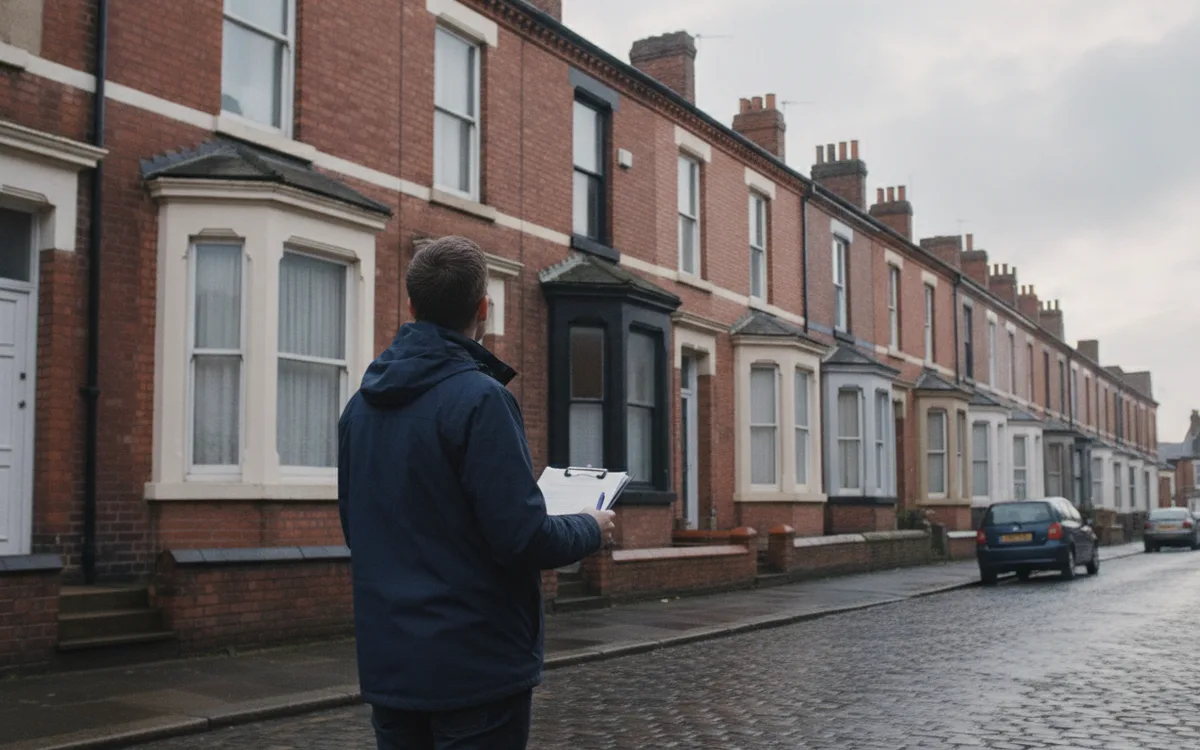
Why Leeds buyers instruct a level 3 building survey
What separates this level from the mid-level report is not the length of the document. It is the question the surveyor is asked to answer. A Level 2 records condition. A Level 3 records condition and then explains it: why the render sounds hollow on the gable, why the floor falls away towards the chimney breast, whether the crack above the bay window finished moving thirty years ago or is still opening. You are buying a diagnosis rather than a checklist, and on a difficult property that difference decides whether you can go back to the seller with facts or only with worries.
Practically, we attend within 3 to 5 working days of instruction and the report follows within 3 to 5 working days of the visit, with attendance inside 24 hours where an exchange date leaves no room. The fee is fixed and set out in writing before you commit to anything, and there are no charges added afterwards. The Chartered Surveyor who walks the building is the one who writes it up and the one who takes your call, which at this level is part of the work rather than an extra.
What the survey covers
What a level 3 building survey includes
A Level 3 Building Survey (formerly the full structural survey) is the most thorough RICS inspection. It suits period homes, listed buildings, timber-framed and non-standard construction, properties that have been extended or altered, and anything in poor condition. The surveyor examines the structure and fabric in detail, explains the likely cause of any defect, sets out repair options and priorities, and discusses the findings with you before and after the inspection.
- Verbal discussion with the surveyor before and after to discuss any issues.
- A more detailed external and internal visual inspection of the property and services (e.g. gas, boiler, electrics) compared to a HomeBuyer Survey.
- Advice on, and the level of repairs.
- Advice regarding the energy efficiency of the building (Section K).
Suits Buyers of pre-1900 or period property, listed and conservation-area homes, extended or converted houses, non-standard construction, or any property showing signs of movement, damp or neglect.
What a Level 3 Building Survey actually includes
The inspection is visual, but it is as thorough as a visual inspection can be made without taking the building apart. The surveyor gets into the roof void and looks at the timbers, the underside of the coverings, the insulation, the ventilation and any tanks. Flat roofs that can be reached safely from a ladder are inspected from above rather than guessed at from the ground. Cellars are entered wherever access is safe, and in Leeds there is usually a cellar to enter. Loose floor coverings are turned back at corners with the owner's permission, inspection chambers are lifted where they can be found, and moisture readings are taken around the perimeter at low level and anywhere else the building invites attention.
The report then works through the property element by element and, for every defect, answers three questions: what it is, what caused it, and what to do about it and in what order. Repairs are described with enough precision that a builder can price them without a second visit. Where something genuinely needs a specialist to take it further, the report names that specialist and explains what they will be asked to determine, instead of leaving you holding an instruction to seek further advice with no idea what advice or from whom. Energy efficiency is covered under Section K, and the surveyor discusses the property with you before the inspection and again once you have read the report.
- A conversation with the surveyor before the visit, so anything that bothered you at the viewing is looked at deliberately rather than by chance.
- Roof void inspection covering the structure, the coverings from beneath, the fixings, insulation, ventilation and evidence of past or present water entry.
- External inspection of walls, pointing, render, rainwater goods, chimney stacks and flashings, from a ladder where that is safe and by drone where it is not.
- Internal inspection of every accessible room, with moisture readings taken and the reasoning behind each one explained.
- Cellars, outriggers, garages, outbuildings and boundary walls, which on Leeds terraces carry far more of the risk than buyers expect.
- A visual assessment of the services on view, their apparent age, and a clear statement of what should be tested before exchange.
- The likely cause of every defect recorded, with repairs ranked by urgency so the money goes where it does most good first.
- Advice on the energy performance of the building under Section K, and a follow-up call once the written report has landed.
What it does not include, and exactly where the Level 2 line falls
A Level 3 is not a licence to dismantle somebody else's house. The surveyor does not open up walls, lift fitted carpets or laminate, take up fixed floorboards, remove secret fixings, dismantle boxing or move heavy furniture and stored goods. Services are looked at, not tested, so there is no electrical certificate and no gas safety check inside the report. It is not a search: the Coal Authority mining report, the flood search and the drainage and water enquiry are your solicitor's to obtain, although the report will tell them when one is warranted. Asbestos materials are noted where they are visible and suspected, but they are not sampled under this instruction. And unlike the mid-level report, a Level 3 does not automatically carry a market valuation or a reinstatement figure for insurance, so if you want either of those, ask for them when you instruct.
The line between the two levels is best drawn from this side of it. A Level 2 is a proportionate screening exercise on a conventional house that looks to be in reasonable order, and when it meets something awkward it is designed to stop, flag it and send you elsewhere. A Level 3 is designed to keep going. On a Leeds property with a cellar, a subdivided plan, unrecorded alterations or visible movement, a Level 2 will frequently produce a page of items marked for further investigation, and you then pay a second professional to answer the questions the first one raised. The deeper report answers them the first time.
There are properties where a Level 3 is genuinely unnecessary, and we will say so before you spend the money. A well-kept 1980s or 1990s detached house at Colton, Manston or Adel with its original layout, a sound covering, no extension and no sign of movement is a mid-level property. So is most purpose-built modern flatted stock. Choosing the deeper report there buys you thoroughness you do not need, and we would rather tell you that on the phone than after the invoice.
The Leeds properties where a Level 3 earns its keep
Leeds hands a surveyor a particular set of problems, and they are problems of alteration as much as of age. The city's terraces and villas have been extended, subdivided, converted to flats, let to students, converted back, and repaired in whatever way was cheapest at the time. Very little of that is documented. The Level 3 exists to read a building backwards and work out what happened to it.
These are the situations where we routinely recommend the deeper report rather than the mid-level one.
- Through terraces in Kirkstall, Meanwood and Bramley where the rear outrigger has settled away from the main house and the junction between the two has been filled repeatedly instead of repaired once.
- Victorian and Edwardian villas in Headingley, Roundhay and Chapel Allerton split into flats, where walls have been removed floor by floor and the original load path is no longer obvious from either side.
- Stone property on the western edge at Horsforth, Rawdon, Yeadon and Farsley, where solid walls, heavy stone slate roofs and a later coat of cement render work against each other.
- Any house with a dormer loft conversion and no completion certificate, where the surveyor has to establish from inside whether the floor was strengthened and whether the escape route is real.
- Mills and warehouses converted to flats around Holbeck, Hunslet and the Kirkstall Road corridor, with cast iron columns, timber floors, wide single ply roofs and communal plant you will help pay to replace.
- Houses bought at auction or repossessed and left empty over a winter, where burst pipework, a dead boiler and stripped metal are ordinary rather than bad luck.
- Rear returns opened into kitchens, where the beam or lintel carrying the wall above is concealed by plasterboard on both faces and the only evidence is the way the door frames sit.
- Anything you are buying specifically to renovate, because the report sequences the work and separates the repairs that hold the building up from the ones that make it pleasant.
What the written report contains and how to use it
The document is long, and it is meant to be read in sections rather than cover to cover in one sitting. It opens with an overall summary of the property and the matters that need attention most urgently, then works through the outside, the inside, the services, the grounds and the legal points your conveyancer should take up. Each element carries a description of what was seen, an opinion on why it is in that condition, and a recommendation. Photographs are used where a photograph settles the point faster than a paragraph.
The section buyers use hardest is the one on repairs and priorities. It separates work that must be done before or shortly after completion from work that can wait a season or two and work that is simply maintenance. That ranking is what makes the report useful in a negotiation. Going back to a seller with a general complaint that the house needs work rarely moves anybody. Going back with a specific defect, a stated cause and a described repair usually does, because the seller's agent can see that a different buyer will be told the same thing.
There is also a list of matters for your legal adviser: missing consents, guarantees that should be handed over, shared drainage, rights of access across a neighbour's yard, boundary responsibility and any search we think the setting demands. Getting those in front of a conveyancer early is often worth more in saved time than the survey fee, because they are the things that stall an exchange in the last fortnight.
Instructing a Level 3 Building Survey in Leeds
Instruct as soon as your offer is accepted. A Level 3 takes longer on site than the mid-level report, commonly several hours on a cellared terrace or a converted villa, and it needs a run at the building rather than a slot between two viewings. We book access with the agent and tell them exactly what we need open: the loft hatch, the cellar, the meter cupboards, any outbuilding and the rear yard. If the property is tenanted, and a great deal of the Headingley, Hyde Park and Burley stock is, we allow extra time for notice.
Tell the surveyor beforehand what you noticed. Buyers are often better observers than they think. A door that would not shut, a smell in a back bedroom, a section of ceiling that had clearly been replaced, a patch of garden that stayed wet in dry weather: every one of those is a thread worth pulling, and a surveyor who knows to pull it starts an hour ahead.
Where the report identifies something that needs a specialist opinion, we can carry that work out rather than handing you a list of strangers to ring. That covers a structural engineer's report where movement needs a definite answer, a timber and damp report where moisture has got into structural timber, a drone roof survey on a tall Victorian roof or a mill conversion, and an asbestos survey before refurbishment of anything built or refitted before the year 2000. Keeping the follow-up with the surveyor who saw the property first means nobody starts again from the pavement.
Why instruct us
What Leeds buyers get from us
The surveyor who inspects is the surveyor you speak to
Personal, one to one communication with the surveyor and no third parties involved. You can talk through concerns before the visit and the findings afterwards.
Fixed fees, no hidden charges
The fee quoted is the full fee. Every survey is undertaken by a qualified Chartered Surveyor, fully insured and VRS registered.
Attend in 3 to 5 working days, report in 3 to 5 working days
The average repair bill for new home owners is £5,750, which is exactly what a survey is designed to catch before you exchange. On request the surveyor can attend and report within 24 hours.
Level 3 Building questions in Leeds
Level 3 Building Survey questions from Leeds buyers
Is a Level 3 Building Survey the same as the old full structural survey?
It is the direct successor to it. The term full structural survey was retired when RICS set out the three numbered levels, and what people meant by it is now the Level 3 Building Survey. The name is misleading in one respect: the report covers the whole fabric, the services on view and the grounds, not only the structure. If you want an opinion on the structure alone, that is a structural engineer's report and a different instruction.
Will my Leeds Level 3 Building Survey come with a market value figure?
Not automatically. The deeper report concentrates on condition, cause and repair, and the mid-level report is the one that carries a market valuation and a reinstatement figure as standard. If you want a figure alongside a Level 3 on a Leeds property, say so when you instruct and we will quote for the valuation as part of the same visit rather than sending a second surveyor out.
Will the surveyor lift floorboards or open up walls during a Level 3?
No. Even at this level the inspection stays non-destructive, because the property still belongs to the seller. Loose coverings are turned back at corners where permission has been given, hatches and covers are lifted, and concealed areas are inspected wherever there is a safe opening. Where something important is hidden, the report says what is hidden, why it matters and what opening up would involve once you own the building.
How long does a Level 3 Building Survey take on site in Leeds?
It depends on the building rather than the calendar. A compact two-bedroom property with no cellar might take two hours. A three-storey converted villa in Headingley, or a terrace with a cellar, an outrigger and a loft conversion, regularly takes most of a working day. We do not book two Level 3 inspections back to back, because the second one always suffers.
Is a Level 3 worth it on a house I am buying to renovate anyway?
It is usually worth more, not less. If you already intend to strip the place back, the value of the report is in the sequencing: which defects are structural and dictate the order of works, which are cosmetic and can wait, and which will force your hand on the roof or the drainage before you spend anything on kitchens. It also tells you what you are inheriting that no amount of decorating will fix.
Can a Level 3 Building Survey be done on a flat?
Yes, and on a converted Leeds mill or a subdivided villa it is often the correct level. The surveyor inspects the flat itself in full and the accessible common parts, then comments on the condition of the building as a whole, because the roof, the external walls and the communal plant will reach you through the service charge whether you ever see them or not.
Will a Level 3 tell me what the repairs will cost?
The report describes each repair in enough technical detail for a contractor to price it accurately, and it ranks the work by urgency, but a surveyor is not a quantity surveyor and putting a figure on building work is the contractor's job. What the report gives you is the specification, so that three builders price the same scope and you can compare their numbers meaningfully.
My Leeds property is in a conservation area. Does that change the Level 3?
It changes what the recommendations can say. In a designated area, replacing windows, altering a roof covering, rendering a stone elevation or removing chimneys may need consent that a previous owner may not have obtained. The report identifies the constraint, flags any alteration that looks as though it went ahead without permission, and asks your conveyancer to check the position before you commit.
Does a Level 3 Building Survey cover the garden walls, garage and outbuildings?
Yes, and on Leeds terraced property those are often where the money is. Yard walls built of soft handmade brick with failed coping, detached garages with corrugated roofs, and outhouses converted to utility rooms without foundations all get inspected and reported. Retaining walls between properties on the sloping ground at Armley, Bramley and Beeston get particular attention, because responsibility for them is frequently unclear.
What happens if the surveyor cannot get into the cellar or the loft?
The report records the area as not inspected, states plainly why access failed, and explains what could not therefore be assessed. That is not a formality. A cellar that could not be entered on a Leeds terrace leaves a real gap in the picture, so we will usually try to rearrange rather than write it off, and we tell you before the report is issued so you can decide whether to push for access.
Can I use the Level 3 report to renegotiate the asking price?
Buyers do it every week, and the reason the deeper report works in a renegotiation is that it states causes rather than symptoms. A seller can dismiss a comment that the roof looks tired. It is much harder to dismiss a description of failed fixings, the extent of slipped units, and the repair that follows from it, because the next buyer's surveyor will find exactly the same thing.
Do I still need a Level 3 if the house was built in the 1990s?
Usually not, and we will tell you so. A 1990s house that has not been extended, shows no cracking and has its original roof is a straightforward mid-level property. The exceptions are worth knowing: a converted or extended one, a timber-framed example where the frame has been altered, or one where a previous owner has fitted spray foam or dug out the garage floor to make a room.
Book your survey
Book a level 3 building survey in Leeds
A fixed fee and the earliest available date, from the surveyor who will carry out the inspection.
Prefer to talk it through first?
Call 07970 562 963